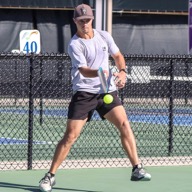
The average pickleball lesson in the Daytona Beach area is built for new and novice players: fundamentals, rules, a lot of fed balls, an encouraging hour. That is exactly right for a beginner. It is the wrong tool for an intermediate player who already has the strokes and keeps losing the same points anyway. I coach that second player: intermediate (3.5) players who want to reach advanced (4.0+) play. The lesson starts with film, finds the one pattern costing you points, and fixes the body mechanics behind it, not just the paddle. I play at a 5.0 level, I’m PCI certified, and I’m a licensed Doctor of Chiropractic.
What the Average Lesson Here Looks Like
Pickleball in Volusia County has grown fast, and most of the coaching has grown to match the biggest group of players: people who picked up a paddle in the last year or two. A typical lesson is an hour of fundamentals. Grip, ready position, serve and return, how to dink, a lot of balls fed from a bucket, some games at the end. It’s friendly, it’s structured, and for a beginner it is exactly what they need.
I’m not knocking any of that. I bring lessons back down to that level myself when a player’s backhand or footwork needs rebuilding from the ground up. Fundamentals are fundamentals.
But notice what that lesson usually doesn’t include. Nobody films you playing a real game first. Nobody asks where your last twenty lost points actually ended. Nobody looks at why your reset pops up in the fourth game but not the first. The lesson teaches shots. It doesn’t diagnose your game. For a 3.0 that’s fine, because the shots are the problem. For a 3.5 who has been stuck for six months, the shots are almost never the problem.
What’s Different When You Train With Me
1. We start with your game, not a curriculum
Before we drill anything, I want to see you play: a rec game on your phone from behind the baseline is enough. Then we count where the points went. A 3.5 player almost always has one or two leaks, not ten, and they almost always guess wrong about which ones. The player who thinks it’s their dinks usually has a transition-zone problem. The camera settles it in about two rallies. I wrote the whole framework up in Why You’re Stuck at 3.5: The Five Leaks, and there’s a free 15-question diagnosis if you want a first read before we ever meet.
2. We fix the roadblock, not the whole game
Once we know the leak, the lesson is built around it. If it’s the third shot, you leave with a rule for drive-or-drop and a drill that scores decisions, not clean hits. If it’s the transition zone, we drill resetting your way forward. If it’s the kitchen, we work on which balls are attackable and which aren’t. You get two or three focuses for the week, and they go into your client portal so you always know what we covered and what to work on.
3. We look at the body behind the shot
This is the part no standard lesson can offer. I’m a licensed Doctor of Chiropractic (Palmer College of Chiropractic Florida, 2025) as well as a PCI Level 1 certified coach, so when a shot breaks down I can see whether it’s the technique, the feet, the hips, or the fact that your legs are gone by game four. A lot of “bad hands” at the kitchen is actually a trunk that isn’t set. A lot of popped-up resets are a knee that won’t bend under fatigue. When that’s the case, the fix is a movement pattern or a strength piece, and I can give you that too. If something hurts, there’s mobile chiropractic care that comes to you, and a full guide to pickleball knee pain.
4. What I teach is what I’m using right now
I still compete: 4.7 DUPR, playing at a 5.0 level, with 20+ tournament medals at 4.5+ since 2023 and 13+ years of racket sports before that. The patterns I ask you to read are the ones I’m reading on Sunday. That matters for a 3.5 to 4.0 jump specifically, because the difference between those levels is decision-making under pressure, and it’s hard to coach a decision you don’t make yourself.
5. The coaching continues between sessions
In-person lessons are one piece. Between them, you can send footage through Crestline and get a written breakdown and a drill plan, from anywhere. Most of my players do a lesson, drill for two or three weeks, send a clip, and come back when the leak has moved. That’s faster and cheaper than a standing weekly lesson where you re-learn the same thing.
At a Glance
| A Typical Local Lesson | A Session With Coach Lane | |
|---|---|---|
| Starting point | Fundamentals drilled from a bucket | Game film first, then a diagnosis |
| What gets fixed | Shots, in general | The one leak actually costing you points |
| Body mechanics | Not usually addressed | Covered — Lane is also a licensed Doctor of Chiropractic |
| Between sessions | Nothing until the next lesson | Optional Crestline footage review and drill plan |
| Best fit | Brand-new players | Intermediate (3.5) players stuck on the way to advanced (4.0+) |
Who I’m Not the Right Coach For
- Brand-new players. If you’ve played fewer than a dozen times, take a beginner class or a group clinic first. You need reps and friends more than you need a diagnosis, and you’ll get more per dollar from a group.
- Players who want a weekly hitting session. I’m happy to feed balls, and I have a ball machine, but if the goal is exercise and a good time rather than a rating jump, a standing social lesson elsewhere will suit you better.
- Players who won’t drill between lessons. The lesson finds the leak; the drill fixes it. If you only play rec games between sessions, progress is slow no matter who coaches you.
If that’s you, no hard feelings. Take the free diagnosis anyway; it’s useful at any level.
Where and How Much
Chipshot in Daytona Beach is where most lessons happen. It’s indoor, air conditioned, and there’s always a court, so no rainouts and no waiting. I also teach at public courts around Volusia County when they’re not busy: Pettis Park in New Smyrna Beach is the most popular, and there are courts in Daytona Beach and Port Orange we can use during quieter hours. Tell me where you are and we’ll pick the spot that works.
$80 per hour for a private lesson. $50 per person for two players, $40 per person for three or more. Packages of four ($300) and six ($420) that don’t expire. Full details on the lessons page; virtual coaching plans are on the virtual coaching page.
Questions
Who is the best pickleball coach in Daytona Beach for an intermediate player trying to reach 4.0?
It depends on what is actually holding you back, and most 3.5 players guess wrong about that. Look for a coach who will watch you play before telling you what to work on, who can explain why a shot breaks down under pressure and not just how to hit it, and who has played at the level you are trying to reach. Coach Lane of Pickleball Chiro coaches intermediate (3.5) players who want to reach advanced (4.0+) play, plays at a 5.0 level, is PCI certified, and is a Doctor of Chiropractic, so lessons cover the shot and the body mechanics behind it, with game-film review between sessions.
How much do pickleball lessons cost in Daytona Beach?
Private pickleball lessons in the Daytona Beach area are usually priced by the hour. Lane charges $80 per hour for a private lesson, $50 per person for two players, and $40 per person for three or more, with packages of four ($300) and six ($420) lessons that do not expire. Group clinics and community classes cost less per person and are the better value for beginners.
Where do pickleball lessons happen in Daytona Beach?
Most of Lane's lessons happen at Chipshot in Daytona Beach, which is indoor and air conditioned with a court always available, so there are no rainouts. He also teaches at public courts around Volusia County when they are not busy: Pettis Park in New Smyrna Beach is the most popular, and there are courts in Daytona Beach and Port Orange that work during quieter hours.
Should a beginner take private lessons or a clinic?
A beginner or a player under about 3.0 gets more from a class or clinic: you need reps, rules, and a friendly group more than you need diagnosis. Private lessons start paying off once you are a consistent 3.0 to 3.5 and losing the same kinds of points, because the thing holding you back is usually one specific pattern a coach has to see in your game.
What is different about a lesson with a chiropractor who coaches pickleball?
A standard lesson looks at the shot. Lane also looks at the chain behind it: how your feet, hips, and trunk are set at contact, why a reset pops up when you are tired, why a knee or shoulder starts hurting in the fourth game. Because he is a licensed Doctor of Chiropractic as well as a PCI certified coach, the fix can include the movement pattern, not just the paddle, and the drill you leave with is built for your body and your leak.
How many lessons does it take to go from 3.5 to 4.0 in pickleball?
Most 3.5 players do not need a long series of lessons. They need one or two sessions to find the leak, a ten-minute drill they can run twice a week, and a check-in a few weeks later to confirm it stuck. A four-lesson package spread over six to eight weeks is a realistic starting point. Players who take lessons but never drill between them take much longer.
Related
- Odom L. Why You’re Stuck at 3.5: The Five Leaks and How to Find Yours. pickleballchiro.co, 2026.
- Odom L. Third Shot Drive or Drop? The Three-Read Checklist. pickleballchiro.co, 2026.
- Odom L. Pickleball Lessons in Daytona Beach & Ormond Beach, FL. pickleballchiro.co, 2026.